Continuous Line Design of Campervan: Minimalist Aesthetics for Modern Creatives
In an era where visual noise dominates digital spaces, the appeal of simplicity has never been stronger. The Continuous Line Design of Campervan represents more than just a stylistic choice; it is a reflection of a broader cultural shift toward mindfulness, efficiency, and clarity. This artistic technique, characterized by a single unbroken stroke that defines the subject without lifting the pen or brush, captures the essence of freedom and movement associated with van life while maintaining a clean, sophisticated aesthetic.
For designers, marketers, and content creators, understanding this style is crucial. It bridges the gap between nostalgic wanderlust and modern minimalism. Whether you are developing brand identity materials, creating social media content, or designing physical products, the continuous line approach offers a versatile solution that resonates with audiences seeking authenticity and calm in their visual consumption.
The Evolution of Single-Line Art in Digital Media
Single-line art is not a new concept. Its roots can be traced back to early 20th-century modernists like Picasso and Matisse, who used simplified forms to express complex ideas. However, its resurgence in the digital age is driven by specific technological and behavioral changes. As screen sizes vary from massive desktop monitors to tiny smartwatches, scalable and legible graphics are essential. A continuous line decorative element drawn on white provides high contrast and immediate recognition, making it ideal for responsive web design and mobile-first interfaces.
Furthermore, the rise of the "creator economy" has democratized design. Entrepreneurs and freelancers often lack the budget for extensive custom illustration teams. Accessible assets, such as those provided in EPS, SVG, and JPG formats, allow non-designers to maintain professional standards. The availability of vector files ensures that these designs remain crisp at any size, a critical factor for businesses printing everything from business cards to vehicle wraps.
Why the Campervan Motif Resonates Today
The campervan is a powerful symbol. It represents autonomy, adventure, and a break from the rigid structures of traditional corporate life. For professionals aged 20–50, many of whom are navigating remote work arrangements or seeking better work-life balance, the campervan imagery speaks directly to their aspirations. When rendered in a continuous line style, the image becomes less about the literal vehicle and more about the feeling of flow and journey.
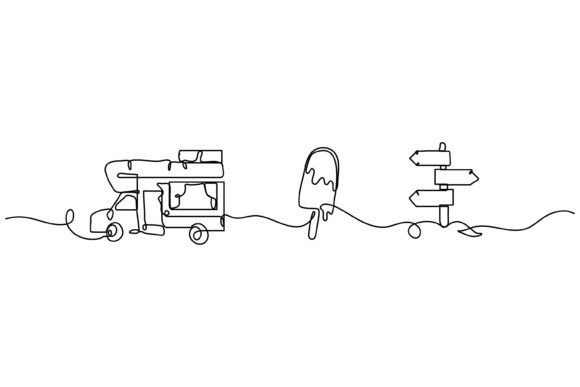
This abstraction allows for broader application. A detailed, photorealistic image of a van might feel too specific or cluttered. In contrast, a Continuous line design of campervan, ice cream and direction combines multiple narrative elements into a cohesive whole. The ice cream adds a touch of leisure and joy, while the directional arrow suggests progress and purpose. This combination creates a micro-story that viewers can interpret personally, enhancing engagement without overwhelming them with detail.
Practical Applications for Businesses and Creators
Integrating minimalist line art into your workflow offers several tangible benefits. Here is how different professionals can leverage these assets:
- Brand Identity: Startups in the travel, lifestyle, or wellness sectors can use single-line icons to convey sophistication and approachability. The simplicity suggests transparency and ease of use.
- Social Media Content: In feeds crowded with high-saturation photos, a black-and-white line drawing stands out through negative space. It stops the scroll by offering a visual pause.
- Print and Merchandise: Because the design is essentially a path, it translates perfectly to embroidery, laser cutting, and screen printing. The lack of shading reduces production costs and complexity.
- Web UI Elements: Use these vectors as loading animations or section dividers. The continuous nature of the line can guide the user’s eye down the page, improving navigation flow.
When selecting assets, prioritize versatility. A package that includes EPS, SVG, and JPG formats ensures you are prepared for any medium. SVGs are indispensable for web performance, allowing for small file sizes and CSS styling. EPS files remain the standard for professional print shops, while JPGs offer quick previews and easy insertion into documents or presentations.
Technical Considerations for High-Quality Implementation
While the aesthetic appears simple, executing continuous line design requires precision. The weight of the line must be consistent to maintain visual harmony. When incorporating elements like a campervan, ice cream, and direction signs, the transition between objects must be seamless. There should be no awkward jumps or breaks that disrupt the viewer’s eye movement.
For those customizing these designs, consider the background context. A single line decorative element drawn on white relies heavily on contrast. If placing the design on a colored or textured background, ensure the line color remains distinct. Black or dark navy lines typically perform best, but brand colors can be applied if they provide sufficient visibility. Avoid using gradients within the line itself, as this can muddy the clean look that defines the style.
Aligning with Modern Consumer Expectations
Today’s consumers are increasingly discerning. They value brands that demonstrate intentionality. Cluttered, aggressive marketing visuals often trigger skepticism. In contrast, minimalist design signals confidence. It suggests that the brand has nothing to hide and values clarity. By adopting the Continuous Line Design of Campervan aesthetic, businesses align themselves with values of sustainability and mindful consumption.
This alignment is particularly relevant for the eco-tourism and outdoor industries. The campervan lifestyle is often associated with leaving no trace and appreciating nature. A design style that uses minimal ink and maximum impact mirrors this environmental ethos. It is a subtle but effective way to reinforce brand values through visual language.
Future Trends in Minimalist Illustration
As we look forward, the demand for personalized yet scalable graphics will continue to grow. We are likely to see more hybrid approaches, where continuous line art interacts with dynamic digital elements. For example, an SVG of a campervan could animate along its path when a user hovers over it, adding interactivity without sacrificing load speed.
Additionally, the integration of AI tools in design workflows will make generating variations of these line drawings easier. However, the human touch in curating the flow and emotional resonance of the line remains irreplaceable. Tools can generate paths, but designers must ensure the narrative coherence of combining elements like vehicles, food, and directional cues.
Recommendations for Effective Usage
To maximize the impact of these design elements, consider the following best practices:
- Maintain White Space: Do not crowd the line art. Allow ample breathing room around the design to emphasize its elegance.
- Consistency is Key: If you use a continuous line style for your campervan icon, ensure other icons in your set follow the same line weight and stylistic rules.
- Test Across Devices: Verify that the thin lines remain visible on low-resolution screens. You may need to slightly increase stroke width for mobile views.
- Contextual Pairing: Pair these visuals with clean, sans-serif typography. Ornate fonts can clash with the simplicity of the line art.
In conclusion, the Continuous line design of campervan, ice cream and direction is not merely a trend but a functional response to the needs of modern communication. It offers a blend of nostalgia and modernity, complexity and simplicity. For professionals and creators, mastering this style provides a powerful tool for connecting with audiences who value clarity, authenticity, and thoughtful design. By leveraging high-quality vector assets and understanding the psychological impact of minimalist art, you can elevate your visual storytelling and create lasting impressions in a crowded digital landscape.