Continuous Line Design of Hat: Minimalist Art
In the world of visual communication, simplicity often speaks louder than complexity. The Continuous Line Design of Hat represents a perfect intersection of minimalist aesthetics and functional illustration. This artistic approach involves drawing a complete image using a single, unbroken line that never lifts from the page or screen. When applied to headwear, this technique transforms a common accessory into a striking graphic element that captures attention through elegance and restraint.
For creators, designers, and small business owners, understanding the nuances of this style opens up a wealth of opportunities. Whether you are branding a boutique fashion label, designing packaging for skincare products, or creating content for a lifestyle blog, the continuous line aesthetic offers a versatile tool that feels both modern and timeless. It is not just about drawing a hat; it is about conveying movement, form, and identity with minimal visual noise.
The Appeal of Unbroken Lines
What makes the Continuous Line Design of Hat so compelling? At its core, it challenges the viewer’s eye to follow a path. Unlike traditional illustrations that rely on shading, color blocks, or multiple contours, a single-line drawing relies entirely on the fluidity of the stroke. This creates a sense of motion and organic flow that rigid geometric shapes often lack.
From a practical standpoint, this style is incredibly adaptable. Because it is typically rendered in black on white or uses high-contrast colors, it scales beautifully. A design that looks sophisticated on a large billboard remains crisp and legible when shrunk down to fit on a business card or a social media avatar. This scalability is crucial for entrepreneurs and marketers who need consistent branding across various platforms.
Furthermore, the minimalist nature of continuous line art aligns perfectly with current design trends that favor clean interfaces and uncluttered visuals. It suggests sophistication without being pretentious. For educators and hobbyists, studying these designs can improve hand-eye coordination and encourage a deeper understanding of form and negative space.
Creative Applications Beyond Fashion
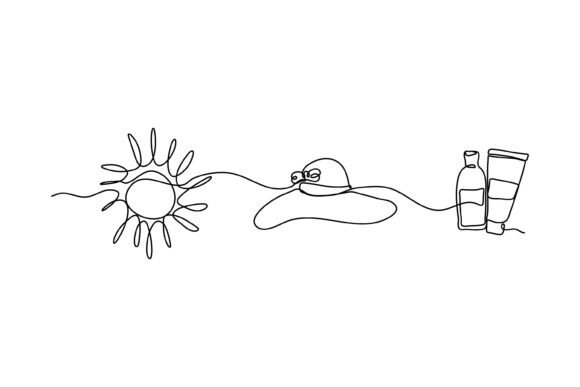
While the primary subject may be headwear, the application of this design philosophy extends far beyond fashion catalogs. Consider the synergy between a continuous line design of hat and lotion for sun protection. This specific combination tells a cohesive story. The hat represents physical barrier protection, while the lotion represents chemical or topical defense. Together, drawn in a single flowing line, they create a unified narrative about holistic sun care.
Imagine a skincare brand launching a new summer collection. Using a single-line illustration that seamlessly transitions from the brim of a wide-brimmed hat into the curve of a lotion bottle creates an immediate visual association. It suggests that these two items belong together in the consumer’s routine. This type of visual storytelling is powerful because it reduces cognitive load. The audience instantly understands the connection without needing explanatory text.
Freelancers and publishers can also leverage this style for editorial illustrations. An article about summer travel essentials can feature a header image where a sun hat morphs into sunglasses and then into a beach towel, all connected by one continuous stroke. This approach keeps the layout airy and engaging, encouraging readers to scroll further.
Technical Formats and Usability
When acquiring or creating these assets, the file format is just as important as the artistic merit. Professional workflows require versatility. Typically, you will receive files in three key formats: EPS, SVG, and JPG. Each serves a distinct purpose in your creative toolkit.
- EPS (Encapsulated PostScript): This is the industry standard for print. If you are designing packaging for that sun protection lotion or printing large-format posters, EPS ensures that your lines remain sharp at any size. It is compatible with most professional design software like Adobe Illustrator.
- SVG (Scalable Vector Graphics): Essential for digital use. SVGs are code-based vectors that load quickly on websites and remain crisp on retina displays. For bloggers and web designers, using SVGs for icons or header graphics improves site performance and accessibility.
- JPG (Joint Photographic Experts Group): While not scalable, JPGs are universal. They are perfect for quick previews, social media posts, or inserting into documents where vector editing is not required. Having a high-resolution JPG ensures you can share your work instantly without worrying about software compatibility.
Understanding these formats allows you to maintain quality control. A designer might start with the SVG to tweak the curvature of the hat’s brim, then export to EPS for the printer, and finally save a JPG for Instagram. This workflow ensures consistency across all touchpoints.
Adapting Style for Different Audiences
The beauty of the Continuous Line Design of Hat lies in its interpretability. You can adjust the thickness, speed, and complexity of the line to target different demographics. For a luxury brand, a thin, delicate line suggests exclusivity and precision. For a youth-oriented streetwear label, a thicker, more erratic line might convey energy and rebellion.
Marketers should consider the context in which the image will appear. On a white background, the black line stands out starkly, offering high contrast. However, do not be afraid to experiment. Placing a white continuous line over a deep navy or pastel background can create a soft, inviting feel suitable for wellness and beauty products. The key is to ensure the line remains unbroken and recognizable, regardless of the color palette.
For educators teaching design principles, these images serve as excellent case studies in abstraction. Students can analyze how much detail can be removed before the object becomes unrecognizable. This exercise teaches the value of essentialism in design—a skill that is transferable to writing, coding, and problem-solving.
Practical Tips for Implementation
To get the most out of these designs, keep your layout clean. Since the artwork is minimal, it thrives in environments with ample white space. Crowding a continuous line drawing with too much text or other graphic elements can diminish its impact. Let the line breathe.
Consistency is also vital. If you use a continuous line hat icon on your website, carry that same stylistic language through your other icons. If the hat is drawn with a loose, sketchy line, your coffee cup or camera icons should match that energy. Mixed styles can confuse the viewer and weaken brand identity.
Finally, consider the emotional tone. A hat can symbolize protection, leisure, status, or mystery. By pairing the Continuous Line Design of Hat with complementary elements—like the aforementioned sun lotion—you guide the viewer’s interpretation. Use this power deliberately to align with your message.
Whether you are a seasoned graphic designer or a small business owner looking to elevate your visual presence, embracing the simplicity of single-line art can yield profound results. It is a reminder that sometimes, less truly is more. By focusing on flow, form, and function, you create designs that are not only visually appealing but also deeply effective in communicating your unique story.