Urban Utility Covers Selection Forming D: A Practical Asset Review
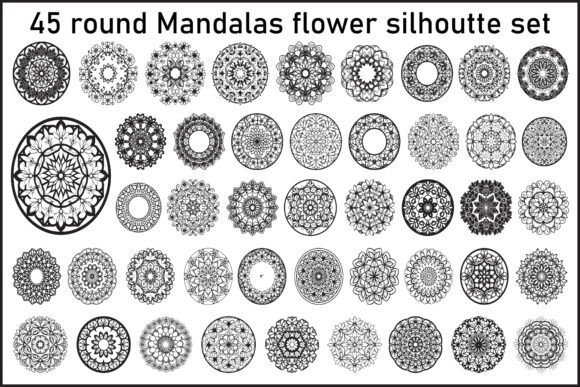
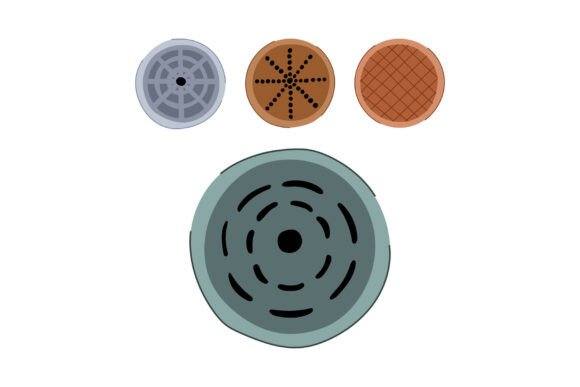
In the realm of technical illustration and urban planning visualization, the ability to convey complex infrastructure details with clarity is paramount. The Urban Utility Covers Selection Forming D represents a specific category of vector assets designed to address this need. Unlike generic clip art that often lacks structural accuracy, this collection focuses on the nuanced reality of municipal surfaces. It presents a curated set of top-down flat vector illustrations featuring various round elements and covers, each rendered with distinct decorative grids, dot patterns, and swirl motifs against a clean white background. For professionals ranging from landscape architects to digital marketers creating city-themed content, understanding the utility and limitations of this specific asset pack is essential for maintaining both aesthetic consistency and technical credibility.
Defining the Scope and Purpose
The core value proposition of Urban Utility Covers Selection Forming D lies in its specificity. Urban environments are defined by their textures and repetitive geometric forms, yet finding high-quality, scalable representations of these elements can be challenging. This collection isolates the manhole cover, utility access point, and drainage grate as standalone graphic components. By offering them in a "top-down" perspective, the assets eliminate the need for complex 3D modeling or perspective correction during the design process. The "Forming D" designation typically implies a specific stylistic iteration within a larger library, focusing here on circular geometries adorned with industrial patterns.
These illustrations are not merely decorative; they serve a functional role in diagrams, site plans, and infographics where spatial relationships must be communicated quickly. The inclusion of varied surface treatments—such as radial grids, concentric dots, and swirling ventilation patterns—allows designers to differentiate between types of utilities without resorting to color coding alone. This differentiation is critical in professional documentation where visual hierarchy guides the viewer's understanding of underground infrastructure.
Technical Characteristics and Design Quality
From a technical standpoint, the quality of the vector paths in Urban Utility Covers Selection Forming D is a primary consideration. In vector graphics, the integrity of the anchor points determines how well an image scales. These assets demonstrate a high level of precision, ensuring that intricate details like the fine lines of a grid pattern or the subtle curves of a swirl remain crisp when enlarged for large-format printing or reduced for mobile interfaces. The use of a white background is a deliberate choice that facilitates easy isolation. Most modern design software allows for the immediate removal of this background, leaving a transparent layer that integrates seamlessly into complex compositions.
The variety of patterns included is particularly noteworthy. A standard utility cover might feature a simple cross-hatch, but this selection expands the vocabulary available to the designer. The dot patterns provide a sense of texture that mimics anti-slip surfaces found in real-world applications, while the swirl designs add a touch of ornamental history often found in older European cities. The grid patterns offer a more rigid, industrial aesthetic suitable for modern developments. This range ensures that the asset pack is versatile enough to support projects spanning different architectural eras and geographic locations.
Evaluating Consistency and Reliability
Consistency is the backbone of any professional design system. When utilizing Urban Utility Covers Selection Forming D, users will find that the stroke weights, line terminations, and overall proportions adhere to a unified style guide. This uniformity is vital when populating a map or a series of illustrations. If one cover appears hand-drawn and another looks mechanically precise, the result is a disjointed visual narrative. Here, the "flat vector" approach ensures that every element shares the same visual weight and lighting logic—or lack thereof—creating a cohesive look.
Reliability extends to file compatibility. As standard vector formats, these files are generally compatible with industry-standard tools like Adobe Illustrator, CorelDRAW, and Inkscape. This broad compatibility reduces friction in the workflow, allowing teams to share assets without worrying about conversion errors or lost data. However, users should always verify the specific file format provided (e.g., SVG, EPS, AI) to ensure it aligns with their current software stack before committing to a project timeline.
Real-World Application and Performance
The true test of any design resource is how it performs under pressure in a real-world scenario. Consider a landscape architect preparing a presentation for a city council regarding a new pedestrian plaza. They need to indicate the location of storm drains and electrical access points without cluttering the rendering. Using Urban Utility Covers Selection Forming D, they can place these elements precisely, relying on the distinct patterns to communicate function. The flat nature of the illustrations ensures they do not cast confusing shadows or compete with the organic shapes of trees and planters in the design.
For digital marketers and bloggers, the application shifts slightly toward engagement and context. A blog post about urban exploration or city maintenance requires imagery that feels authentic. Generic photos can be overused or low-resolution. These vector illustrations offer a stylized alternative that fits perfectly into infographics, social media headers, or article headers. The clean lines and white backgrounds make them ideal for overlaying text or integrating into motion graphics, where they can be animated to reveal hidden information about city infrastructure.
Freelancers and small business owners who produce marketing materials for construction firms or municipal services also benefit significantly. Time is a currency in these sectors. Instead of spending hours drawing a realistic manhole cover from scratch, a professional can select the appropriate variant from this collection, adjust the size, and move on to the next task. This efficiency directly impacts profitability and client satisfaction.
Who Benefits Most from This Collection?
While the versatility of Urban Utility Covers Selection Forming D makes it useful for many, certain groups will derive the most value:
- Urban Planners and Architects: Professionals who need accurate, scalable symbols for site plans and zoning maps. The variety of patterns helps distinguish between different utility types in complex diagrams.
- Graphic Designers and Illustrators: Creatives working on editorial layouts, book covers, or posters that require an urban aesthetic. The decorative elements allow for artistic interpretation while maintaining realism.
- Web Developers and UI/UX Designers: Teams building dashboards for smart city initiatives or municipal websites. The lightweight nature of vector files ensures fast loading times and perfect scaling on all devices.
- Educators and Content Creators: Teachers and YouTubers explaining civil engineering concepts or urban history. Clear, unambiguous visuals help simplify complex topics for students and audiences.
Practical Recommendations and Limitations
Despite its strengths, Urban Utility Covers Selection Forming D is not a universal solution. Users should be aware of its limitations. Because these are flat vector illustrations, they lack the depth and photorealism required for high-end 3D renderings or photomontages where the goal is photographic indistinguishability. Attempting to force a flat vector into a hyper-realistic scene can break immersion unless carefully blended with lighting effects.
Furthermore, while the patterns are diverse, they are still stylized representations. In legal or highly technical engineering documents where exact specifications of bolt holes, rim widths, or material thickness are required, these assets should be used only as conceptual placeholders rather than definitive technical drawings. Always cross-reference with actual engineering standards if the output is for construction purposes.
To maximize the value of this collection, designers are encouraged to customize the assets. Changing the fill colors to match a brand palette, adjusting the opacity to create a watermark effect, or combining multiple covers to create a repeating texture can extend the life of the resource. Do not treat these vectors as static images; view them as modular components ready for adaptation.
Long-Term Value and Workflow Integration
Investing time in learning how to utilize resources like Urban Utility Covers Selection Forming D pays dividends over time. Once integrated into a personal or team library, these assets become part of a standardized toolkit. They reduce the cognitive load of decision-making during the design process, allowing creators to focus on higher-level composition and storytelling. The longevity of vector formats ensures that these files will remain usable for years, regardless of changes in screen resolution or print technology.
Ultimately, the decision to incorporate Urban Utility Covers Selection Forming D into your workflow depends on your specific project requirements. If your goal is to communicate urban themes with clarity, speed, and a touch of industrial elegance, this collection offers a robust foundation. It bridges the gap between abstract symbolism and realistic representation, providing a practical tool for those who navigate the intersection of design and infrastructure. By understanding its capabilities and boundaries, professionals can leverage these assets to enhance the quality and efficiency of their work.