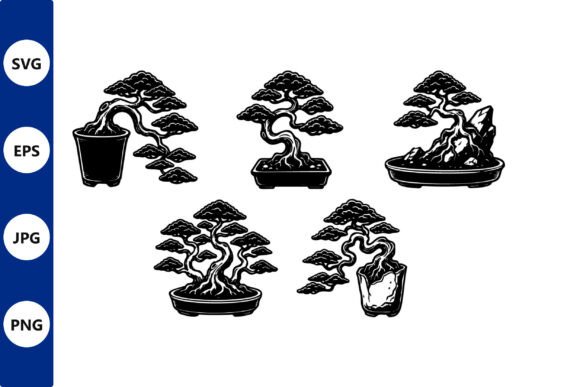
Bonsai Line Art Collection: A Guide to Choosing and Using Bold Silhouettes
There is a distinct quietness that comes with the image of a bonsai tree. It represents patience, growth, and balance, making it a timeless subject for design. When you strip away the color and texture, leaving only the essential form, you get something even more powerful: a bold line art silhouette. The Bonsai Line Art Collection captures this essence perfectly, offering a set of black and white trees in pots rendered as clean, compact compositions. These designs are not just images; they are versatile tools for creating logos, posters, prints, and custom decor that carry a calm, zen mood.
However, finding the right digital assets can be tricky. Many creators download files that look great on a screen but fall apart when printed or scaled. Before you commit to a specific collection, it is vital to understand what makes these line art pieces effective and where common pitfalls lie. Making the wrong choice here can cost you time, money, and professional credibility.
Why Bold Line Art Works for Modern Design
The appeal of the Bonsai Line Art Collection lies in its simplicity. In a world often cluttered with complex graphics, a strong silhouette cuts through the noise. These designs rely on negative space and confident strokes to define the shape of the tree and the pot. This style is particularly effective for branding because it scales effortlessly. Whether you need a tiny icon for a mobile app or a massive mural for a yoga studio wall, the lines remain crisp and legible.
For entrepreneurs and small business owners, this versatility is a game-changer. You can use the same file for a logo on a business card and then expand it for a large format banner without losing quality. The compact composition ensures that the design remains balanced regardless of the medium. Furthermore, the black and white aesthetic allows for easy color customization if your project requires it later, though many find the monochrome look perfectly suited for a minimalist, zen-inspired brand identity.
Common Mistakes When Selecting Digital Assets
One of the most frequent errors designers make is prioritizing visual appearance over file utility. You might see a beautiful bonsai illustration on a thumbnail and assume it is ready for production. Often, these images are low-resolution raster files (like JPEGs) that pixelate the moment you try to enlarge them. If you are planning to print posters or create decals, starting with a non-vector file is a recipe for frustration.
Another oversight is ignoring the complexity of the lines. Some line art collections are overly detailed with thin, fragile strokes. While these may look intricate on a high-end monitor, they can disappear or blur when printed on textured paper, transferred onto fabric for clothing, or used for tattoos. For a design to be truly functional, especially in the context of a Bonsai Line Art Collection, the lines must be bold enough to hold their integrity across various applications.
Furthermore, many users fail to check the licensing terms before downloading. Just because a file is available for download does not mean you have the right to sell products made from it. Using an asset commercially without the proper license can lead to legal issues and force you to rebrand at significant cost. Always verify that the digital download includes a commercial license if you intend to use the designs for client work or to sell physical products like t-shirts and mugs.
The Importance of File Formats and Optimization
To avoid technical headaches, you must pay close attention to the file formats provided. A high-quality collection should include vector formats like SVG and EPS. Vector files are mathematical descriptions of shapes, meaning they can be scaled infinitely without any loss of quality. This is crucial for logos and large prints. If a seller only offers PNG or JPG, you are limited by the resolution of those specific images.
Even within vector files, there is a difference between a raw export and an optimized design. Poorly prepared vectors often contain thousands of unnecessary anchor points, which can cause your software to lag or your cutting machine to misinterpret the path. The best collections are individually cleaned up and optimized. This means the lines are smooth, the nodes are minimal, and the paths are closed properly. This preparation saves you hours of manual cleanup in Adobe Illustrator or similar software, allowing you to focus on creativity rather than troubleshooting.
When evaluating a download, ask yourself: "Is this file ready to use?" If the answer is no, and you will need to spend days fixing broken paths or converting layers, the initial savings on price are likely negated by the time investment. A well-curated Bonsai Line Art Collection provides SVG, EPS, PNG, and JPG formats so you have the flexibility to work in any environment, from web design to laser cutting.
Practical Applications and Creative Possibilities
Once you have secured the right files, the possibilities are vast. For home decor enthusiasts, these silhouettes are perfect for creating custom wall art. You can print them on canvas, frame them as simple black ink prints, or use them as stencils for painting directly onto walls. The calm, zen mood of the bonsai tree complements modern interiors, bringing a sense of nature indoors without the maintenance of a living plant.
For tattoo artists and clients, the bold line style is ideal. Tattoos require clear, defined lines that age well on the skin. The compact composition of these bonsai designs ensures they fit well on smaller areas like wrists, ankles, or behind the ear, while still maintaining their artistic impact. Unlike watercolor-style tattoos that fade quickly, solid line art remains sharp for years.
Entrepreneurs can also leverage these designs for personalized decals and merchandise. Imagine a series of stickers for laptops or water bottles featuring these elegant trees. Or consider using them on tote bags and aprons for a gardening store or a wellness retreat. Because the designs are high-quality and optimized, they translate beautifully into screen printing, heat transfer vinyl, and direct-to-garment printing.
How to Evaluate Your Next Download
Before you finalize your purchase or download, take a moment to review the specifics. Check the preview images closely. Do the lines look uniform? Are the pots and trees clearly defined? Look for customer reviews that mention the usability of the files in real-world scenarios. Does anyone mention that the SVG files opened correctly in their software?
Also, consider the variety within the collection. A single bonsai tree is nice, but a set offers consistency. If you are building a brand, having multiple variations—perhaps different tree shapes or pot styles—allows you to create a cohesive visual language. Ensure the collection aligns with your aesthetic goals. If you want a strict, geometric look, ensure the lines match that style. If you prefer organic, flowing curves, choose accordingly.
Finally, remember that the value of a digital asset lies in how easily it integrates into your workflow. The Bonsai Line Art Collection described here is designed to be opened directly in your software and put to work immediately. By choosing optimized, multi-format files, you bypass the technical barriers that often slow down creative projects. This efficiency allows you to produce professional results faster, whether you are a beginner exploring new hobbies or a seasoned professional delivering for clients.
In conclusion, selecting the right line art is about more than just picking a pretty picture. It is about understanding the technical requirements of your project and ensuring the files you choose support your vision. By avoiding low-resolution traps, verifying licenses, and prioritizing optimized vector formats, you can create stunning, durable, and meaningful designs. Let the timeless elegance of the bonsai tree enhance your work, bringing a touch of serenity and sophistication to every project you undertake.